
🏠 The "Doom Loop" Delusion: Why Seattle’s AI Renaissance is Bulletproofing Your Home Value
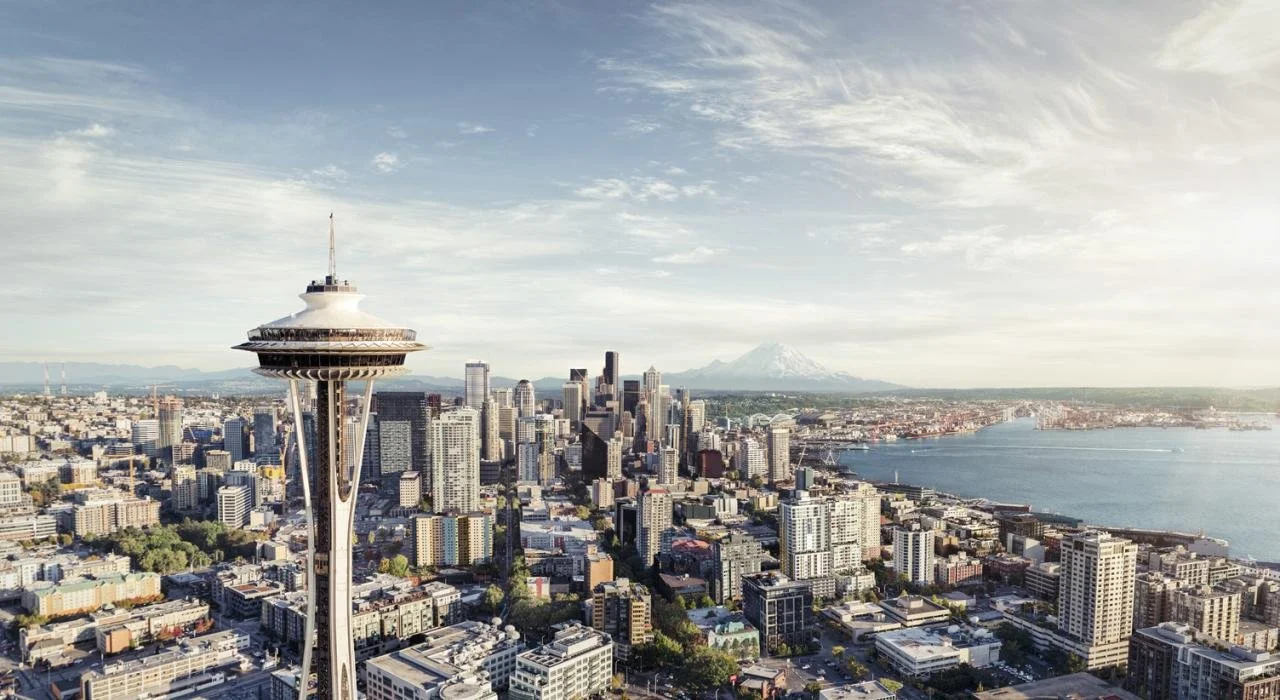
If you rely solely on the grim panorama painted by national headlines, you might be forgiven for believing the Pacific Northwest is sliding inexorably into a state of terminal decline. The narrative is as familiar as it is predictable: downtown office towers standing as glass mausoleums, a supposed "exodus" of the creative class, and the inevitable, gravity-defying collapse of real estate values.
It is a compelling story. It is also, to put it bluntly, an exercise in intellectual lethargy.
To look at vacant desks in a downtown corridor and conclude the housing market is cratering is to mistake a change in the nature of work for a disappearance of the work itself. It is like looking at an empty phone booth and concluding telecommunication has vanished. You are missing the Invisible Architecture—the digital and economic scaffolding—that has replaced the old world.
The AI Engine: From Cloud Capital to Global Cockpit
The critics aren't entirely wrong; the geography of labor has shifted. But the intellectual output of our region is not merely stable—it is exploding. As we close out 2025, Seattle has successfully defended its title as the "Cloud Capital" and pivoted into the global cockpit for Artificial Intelligence.
The "Doom Loop" theorists routinely ignore the structural reality:
The #2 Spot: Seattle now ranks #2 nationally for AI job concentration per capita, trailing only the Bay Area. We aren't just participating in the AI boom; we are hosting it.
The Workforce Floor: Tech workers comprise 13.7% of the total Seattle workforce. This is a Tier 1 density that creates a resilient, high-income "floor" for property values, even when other sectors soften.
The Capital Influx: Greater Seattle captured 5.1% of all U.S. AI startup investment this year. This isn't abstract venture capital; it is billions in fresh liquidity currently hunting for a place to reside.
The "Equity Breakwater": Why Tech Wealth is Built Differently
The unique financial anatomy of our workforce is the secret weapon of the King and Pierce County markets. Unlike economies dependent on fluctuating hourly wages, a massive portion of local wealth is anchored in Restricted Stock Units (RSUs).
With Microsoft and Amazon seeing stock growth in the 16–20% range over the last 12 months, our buyers are not merely saving from a paycheck; they are "minting" down payments through their portfolios. We call this the Stock-Driven Equity Floor.
When national markets feel the chill of interest rate skepticism, this demographic utilizes their vested equity to "buy the dip." They perceive a long-term growth market where the uninitiated see only risk. This explains the Velocity Gap: while the national median "Days on Market" (DOM) has drifted to a sluggish 64 days, the Seattle Metro area is moving at nearly twice the speed, with a median DOM of just 34 days.
Note for the Luxury Bracket: In King County’s $2M+ tier, inventory remains remarkably tight at 45 days. The "exodus" isn't a departure; it's a relocation of capital.
The Great Migration to "Lifestyle Hubs"
The wealth hasn’t left the region; it has simply sought more breathing room. We are witnessing the rise of the "Hybrid Proximity" factor—a trade-off where workers exchange a five-day downtown commute for high-amenity "Second Ring" neighborhoods.
Enclaves surrounding Lake Tapps and Bonney Lake have seen a 12% increase in demand for properties that accommodate this AI-driven remote lifestyle. We aren't just selling houses; we are selling "hubs." For an AI Engineer with a total compensation package exceeding $350,000, a $1.2M home in a scenic, spacious enclave isn't an extravagance—it is the new entry-level.
The RE/MAX Extra Perspective
It is easy to be a pessimist; it requires effort to be an analyst. Betting against Pacific Northwest real estate right now is, fundamentally, a bet against the most disruptive technological shift since the dawn of the internet.
The narrative that Seattle is dying is a piece of convenient fiction. The reality—the empirical, data-backed reality—is that the region is evolving into the engine room of the AI Renaissance.
📊 Market Snapshot: Seattle vs. National (Dec 2025)
| Metric | National Average | King/Pierce (Seattle Metro) | Data Source |
|---|---|---|---|
| Days on Market | 64 Days | 34 Days | Realtor.com / NWMLS |
| Tech Workforce % | ~9% (Top Cities) | 13.7% | DSA / Nucamp |
| AI Talent Ranking | N/A | #2 in Job Density | CBRE 2025 |
| Avg. AI Salary (Base) | $145,000 | $170,000+ | Motion Recruitment |
